
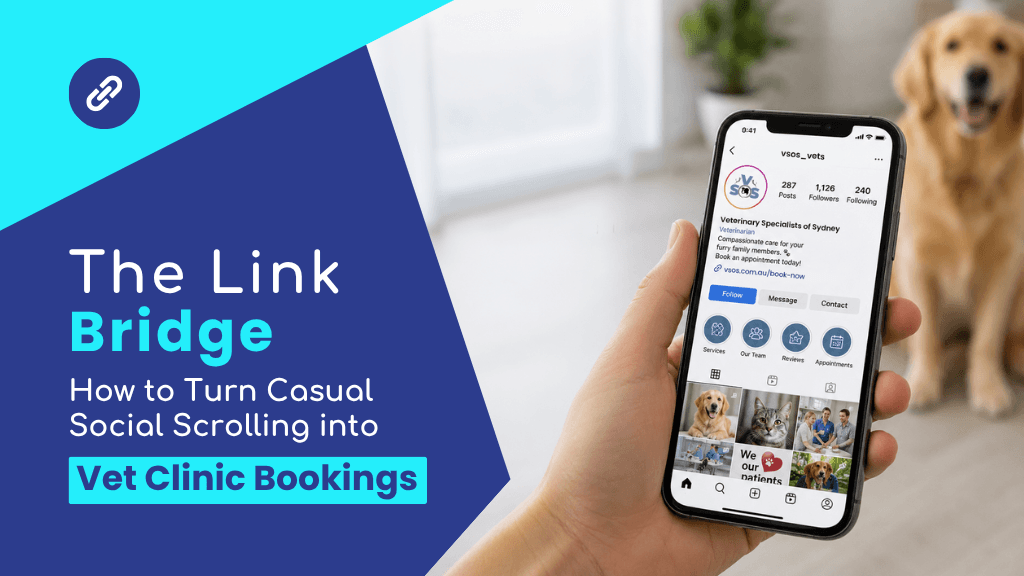
The Link Bridge: How to Turn Casual Social Scrolling into Vet Clinic Bookings
)
In our first article, we unmasked the shifting reality of local search and explained why hashtags are a waste of time on Facebook and Google Maps. In our follow-up post, we issued an alarm to the veterinary profession, breaking down why social media alone isn’t a veterinary marketing strategy.
Social media is a fantastic tool for keeping your practice warm, human and top-of-mind. But if your posts regularly stop at awareness, without giving pet owners a clear next step, you may be missing some of the best opportunities to turn that attention into website visits, enquiries and bookings!
This is where linking becomes so important.
Adding links to your website from Facebook, LinkedIn and your Google Business Profile updates acts as a digital bridge. It moves local pet owners from casual, passive browsing to actively learning more about your services, your team and how to book with you.
Instagram works a little differently, as links in standard captions are not clickable. However, you can still guide pet owners to your website through your bio link, story link stickers, highlights and paid call-to-action buttons.
The key message is simple. Do not let your social media posts become the end of the journey. Wherever the platform allows it, give pet owners a clear next step and make it easy for them to move from interest to action.
Here is exactly why you need to stop posting without a pathway back to your website, and how to build a high-value linking strategy without upsetting the algorithms.
The Strategic Power of the Link Bridge
When you post a picture of a patient on social media, you may get a handful of interactions. When you post that same picture but use it as a teaser to link back to your website, you gain something far more valuable: digital authority, local SEO momentum, and direct appointment bookings.
1. It Builds Deep Clinical Trust
A photo of a cute puppy is great, but it doesn’t prove your medical capabilities. Linking to a full, dedicated Clinical Success Story or Case Study on your website allows you to showcase your team's medical expertise. Whether it’s walking through a complex soft-tissue surgery, a tricky foreign body removal, or a successful senior pet pain management plan, driving readers to your website proves your clinical standards and naturally justifies your treatment fees.
2. It Humanises Your Surgery Before They Visit
When you run a staff spotlight post, don't just list their name and their own pet's name. Link directly to their individual biography page on your website. This allows local pet parents to read about a veterinarian's or veterinary nurse's specific clinical interests (e.g., "Dr. Sarah's passion for advanced feline dentistry"). It forms an emotional, professional bond with the client before they ever set foot into your reception area.
3. It Multiplies Your Local SEO Performance
When a pet owner clicks from Facebook, Google Business Profile or another social channel and lands on a helpful page on your website, that visit matters. It turns a passive scroll into an active step towards your practice.
Without that link, the post may be seen and forgotten. With the right link, it can lead someone to read more, understand your services, trust your team and take the next step towards booking.
Social links are not a magic ranking button, but they are a powerful part of your wider local marketing strategy. They bring more engaged local visitors to your practice, website, strengthen the connection between your content and your services, and help build the online authority your practice needs to stay visible
4. It Breathes Long-Term Value into Short-Lived Content
Many social media posts have a short active life before they disappear down the timeline. A blog post, service page or success story on your own website can keep working for months or years. Your social post acts as the temporary megaphone; your website acts as the permanent library.
Designing Your Linking Strategy
To ensure your team isn't just dropping lazy, uninspiring links that people ignore, use this clear framework to map out your content goals:
| Content Type | Strategic Goal | Recommended Call to Action (CTA) |
|---|---|---|
| Case Study / Success Story | Showcases specific equipment, service and clinical skills. | "Read the full recovery story here - (text link to the specific blog)" |
| Team Spotlight | Highlights specialised training, qualifications, or nursing skills and personalises the individual with their passions and interests. | "Learn more about (name) team and see their specialties" |
| Practice Updates | Promotes seasonal wellness drives, dental savings, or health plans. | "Book a preventative health check today" |
The Golden Rule of Deep Linking
When you add links to your marketing, never just send everyone to your homepage. If a client clicks a post about a dog recovering from a snakebite, they should land directly on that specific snakebite blog post. If they click a post about dental disease, they should land directly on your dental services page. Do not make busy pet owners hunt through your website to find what they were promised; shorten the path to booking.
Navigating the Algorithm: The Link Dilemma
A common concern among veterinary teams is that social media algorithms (especially Facebook's) actively penalise posts containing outbound links because they want to keep users on their own platform.
In 2026, the strategy for managing this has evolved. Here is how to handle link placement across your primary local channels:
Facebook: The Value-First and First Comment Approach
Historically, many marketers placed links in the "first comment" to trick the algorithm. While this is still a viable option for highly conversational posts, Facebook's algorithm has become incredibly sophisticated. It now rewards high-quality, genuine referral traffic.
If you want the best of both worlds, follow the Value-First Rule: make the post highly interesting on its own. Summarise the top clinical tip or the most emotional part of the pet’s recovery before asking them to click away. To maximise reach, use a native visual teaser (like a 15-second Reel of the patient wagging their tail post-surgery) rather than a standard, boring link preview layout.
Google Business Profile: Zero Comment Culture
Do not use the "first comment" tactic on Google Maps updates. Google does not have an active comment culture. Instead, take advantage of the official, built-in Call-To-Action buttons provided by the platform. Use the native "Learn More" or "Book" buttons. It keeps your post clean, makes the next step obvious, and helps you better understand how people are engaging with your profile and website.
How to Drive Engagement to Your Links
An algorithm will only amplify your linked posts if they spark actual human interaction. To get local pet owners to stop scrolling and start clicking, implement these three engagement boosters:
The "Golden Hour" Interaction: The first few hours after a post goes live are a critical testing period for the algorithm. End your captions with open-ended questions to spark conversation (e.g., "Has your pet ever given you a scare with a toxic household item?"). When a client replies, make sure your reception or marketing team responds as quickly as possible. This doubles the interaction density, telling the algorithm your content is worth pushing to a broader local audience.
The 70/20/10 Content Balance: Avoid audience fatigue by structuring your weekly layout cleanly. Keep 70% of your content focused on raw education and patient success stories, 20% on direct community interaction (seasonal posts, polls, pet trivia, jokes etc), and only 10% on purely promotional sales pitches.
The Bottom Line
Stop letting your brilliant clinical stories, hard-working staff profiles, and educational warnings and advice go to just social media posts. Start building the link bridge back to your practice website, and turn your casual online community into loyal, face-to-face clinical clients.
Stop Guessing. Start Growing.
You went to veterinary school to care for animals, not to spend your nights fighting with social media algorithms or turning one clinical case into three different digital formats. If you don't have the time to build a multi-channel marketing ecosystem from scratch, let us take the pressure off.
Our team of dedicated Veterinary Strategists helps clinic owners just like you move beyond the "social media trap" to uncover hidden revenue streams and consistently fill appointment books.
Marketing Built For Your Unique Practice
We know that veterinary medicine isn’t one-size-fits-all, and neither is marketing. Whether you want to empower your internal team or offload the heavy lifting entirely, we design our programs to slot perfectly into your clinic's current setup:
Team Education & Training: We upskill your internal staff, equipping your practice managers or reception teams with the tools, templates, and frameworks they need to manage the rest of your marketing ecosystem effectively.
Done-For-You Marketing: Want to focus strictly on clinical care? We take the wheel on your ecosystem marketing (SEO, Website optimisation, educational posts and targeted Email campaigns) to beautifully complement and amplify your team's existing social media activities.
Google Advertising (PPC): If you need immediate momentum to get more paws through the door, we build high-yield local Google Ads campaigns. This instantly captures pet owners actively searching for care right now, rapidly boosting your new client bookings. It is a proven strategy we run for dozens of veterinary practices that have partnered with us for years because they absolutely love the results.
Ready to find your missing golden opportunities?
Trust us: the very first thing you need isn’t a contract or a complex pitch, it’s just a conversation.
Book a free discovery chat with one of our Veterinary Strategists today. There is absolutely no pressure or obligation. We will simply look at your clinic's current online setup, listen to your goals, and give you practical, actionable advice to grow your local footprint on your own terms.
| Tags:AttractConvertStreamlineSocial Media |